London Fire Brigade experienced one of the busiest summers in its history, with firefighters attending more than 55,000 incidents and Control Officers taking around 100,000 emergency calls between May and August 2026.
Firefighters attended 55,838 incidents across the capital during the four-month period, which was the highest total recorded between May and August in the last five years and more than 20 per cent higher than in 2022, when London experienced extreme heat and some of its most significant wildfires.
Control Officers took 99,329 emergency calls during the same period, almost a quarter higher than in 2022 and nearly 20 per cent higher than last summer.
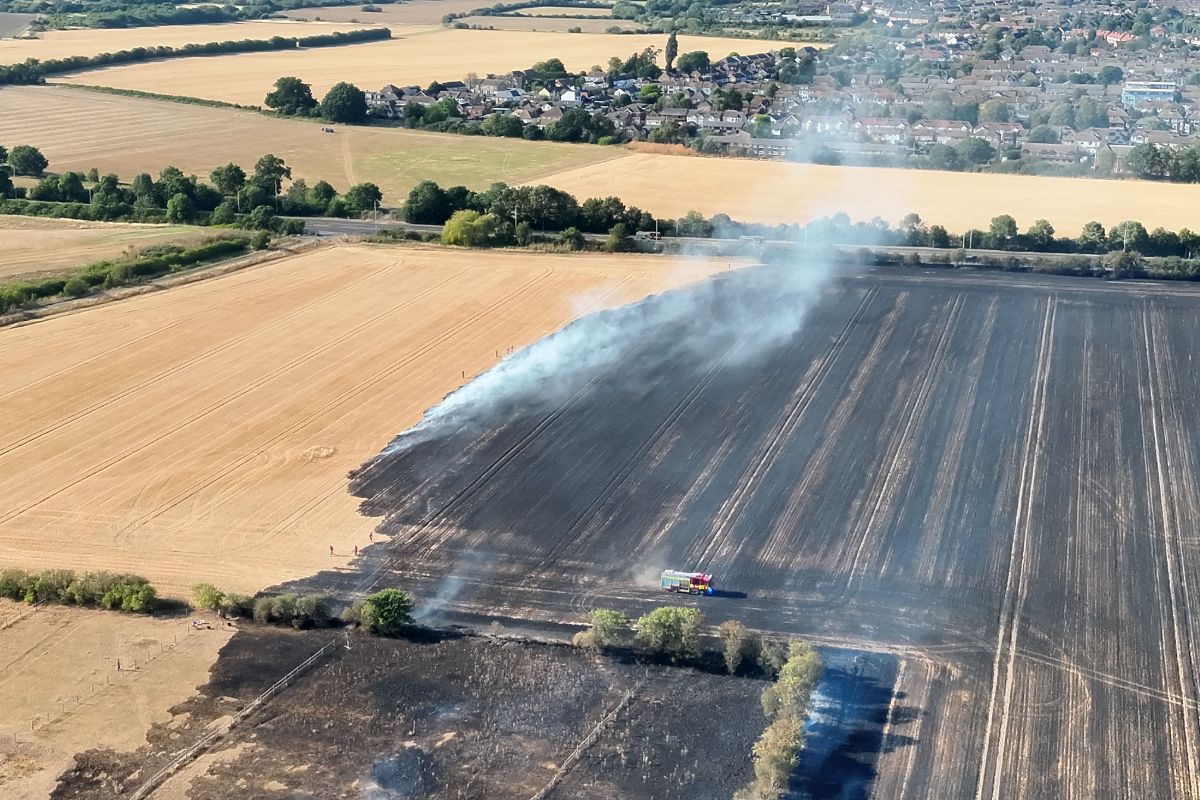
A significant increase in grass fires and wildfires was a major contributor to the sustained demand. Between May and August, firefighters attended 2,911 grassland, woodland and crop fires, while Control Officers received 8,783 calls relating to these incidents.
The number of wildfires* has also surpassed 2022 levels, with 209 recorded so far this year. Of these, 64 required the attendance of at least six fire engines, compared with 137 wildfires recorded during the whole of 2025.
The Brigade's busiest operational day of 2026 came on 29 July, when Control Officers handled more than 1,300 emergency calls. The exceptionally busy day included 63 separate grass fires, with 12 incidents requiring more than four fire engines. The longest single incident lasted just over 12 hours.
The Brigade has continued to strengthen its ability to respond to wildfires, building on the lessons learned from previous summers and investing in specialist equipment, technology and training. This includes a new fleet of Terrain Support Vehicles (TSVs), specialist off-road vehicles designed to help firefighters reach areas that standard fire engines cannot easily access. The vehicles responded a range of incidents in London, ranging from fires covering several hectares to woodland fires involving trees. They were also deployed to support other fire and rescue services across the UK, including Cambridgeshire, Derbyshire, Hampshire and the Isle of Wight, Manchester, South Wales and Suffolk.
More than 2,000 members of Brigade staff volunteered to support wildfire operations this summer, with crews and specialist teams deployed to other areas of the UK experiencing exceptionally high demand. A new Burns Team was also deployed, bringing specialist skills, knowledge and equipment to help firefighters prevent wildfires from spreading. Where appropriate, the team used controlled burning to remove vegetation ahead of the fire front, reducing available fuel and helping to slow the spread of wildfires.
The Brigade also supported fire and rescue services across the country, with London Control Officers taking additional calls from partner services during periods of exceptionally high demand.
Deputy Assistant Commissioner for Control Joanne Smith said: “Our Control Officers have faced an exceptional level of demand this summer, with almost 100,000 emergency calls taken between May and August.
“The sheer volume and sustained nature of the demand has required our teams to make dynamic decisions throughout the day, constantly assessing where the greatest risks were and how best to deploy our resources.
“We were also able to share our expertise and capacity with colleagues around the country when they were facing similar pressures, helping to ensure that risk-critical calls could continue to be answered and resources deployed where they were needed most.
“Our Control Officers have worked incredibly hard throughout what has been an exceptionally challenging summer, and I want to thank them for their professionalism and commitment.”
Throughout the summer, the Brigade worked closely with London's local authorities, land managers, the Met Office and wider resilience partners to prepare for periods of heightened wildfire risk. In the spring, the Brigade wrote to every London local authority encouraging proactive land management measures, including the creation of firebreaks to help prevent wildfires from spreading. Recent incidents have demonstrated the value of this approach. At a significant fire in Orpington, pre-established firebreaks created by the landowner helped limit the spread of the fire.
The summer also saw a significant number of water-related incidents across London. Firefighters attended 340 water-related incidents between May and August, including 10 drownings, some involving young people. This is more than 22 per cent higher than last year, when firefighters attended 279 water-related incidents and recorded eight drownings.
The Brigade has continued to carry out extensive water safety engagement throughout the summer, working with communities to highlight the dangers of open water and encourage people to take extra care around London's rivers, lakes and waterways. This included a large community event at Hampton Court Palace, engagement at Notting Hill Carnival and numerous local events throughout the summer.
London Fire Commissioner Jonathan Smith said: “This has been one of the busiest summers in the Brigade’s history.
“We have faced sustained and exceptionally high demand over a much longer period than in previous years, with our firefighters, Control Officers and support staff working tirelessly in challenging conditions to keep Londoners safe.
“We planned extensively for the summer, drawing on the lessons of previous years to strengthen our resilience, maximise our availability across London and make sure our firefighters had the training, equipment and resources they needed. That preparation has enabled us not only to respond to the demands across London, but also to support colleagues in fire and rescue services across the country when they needed our help.
“I am incredibly proud of everyone who has played their part. From the Control Officers answering emergency calls, to firefighters and officers working in difficult conditions on the incident ground, and the many people supporting our operational response behind the scenes, their professionalism, commitment and determination have been exceptional. They have worked together to save lives, protect homes and businesses and keep communities safe.
“But we cannot assume that summers like this are exceptional events that will simply pass. The changing climate is creating new and increasing challenges for fire and rescue services. We must continue to invest in our people, technology, equipment and resources so that we are ready to meet these challenges and protect London in the years ahead.”
The Mayor of London, Sadiq Khan, said: “On behalf of London I want to thank our brave firefighters and staff who have worked around the clock, under extraordinary pressure, to keep our city safe.
"City Hall's record investment in London Fire Brigade has ensured that it is now better prepared, organised and equipped to fight wildfires.
“But this summer has shown that the climate crisis is on our doorstep right now and will continue to be a threat to our city. With hotter summers becoming a growing reality in London, I’m determined to do everything I can to ensure the capital is as prepared as possible for the impact of climate change, wildfires and extreme heat. That’s why I’ve published the capital’s first ever heat plan in partnership with London Councils, which sets out a long-term roadmap for adapting to increasing heat risk over the coming decades and getting all partners to work closer together to meet new challenges and build a safer and more resilient London for everyone.”