The UK’s first electric-hybrid fire engine has successfully completed a year-long operational trial with London Fire Brigade and is now fully integrated into frontline service.
Since entering operational service at Hammersmith Fire Station in October 2025, the Zero Emission Pumping Appliance (ZEPA01) has attended over 1,500 incidents across London, including 141 fires, 393 special service calls and a major 25-pump warehouse fire in Brent. Throughout the year-long trial, the vehicle completed every operational attendance using battery power alone, demonstrating that low-emission technology can successfully perform in one of the most demanding frontline emergency response roles.
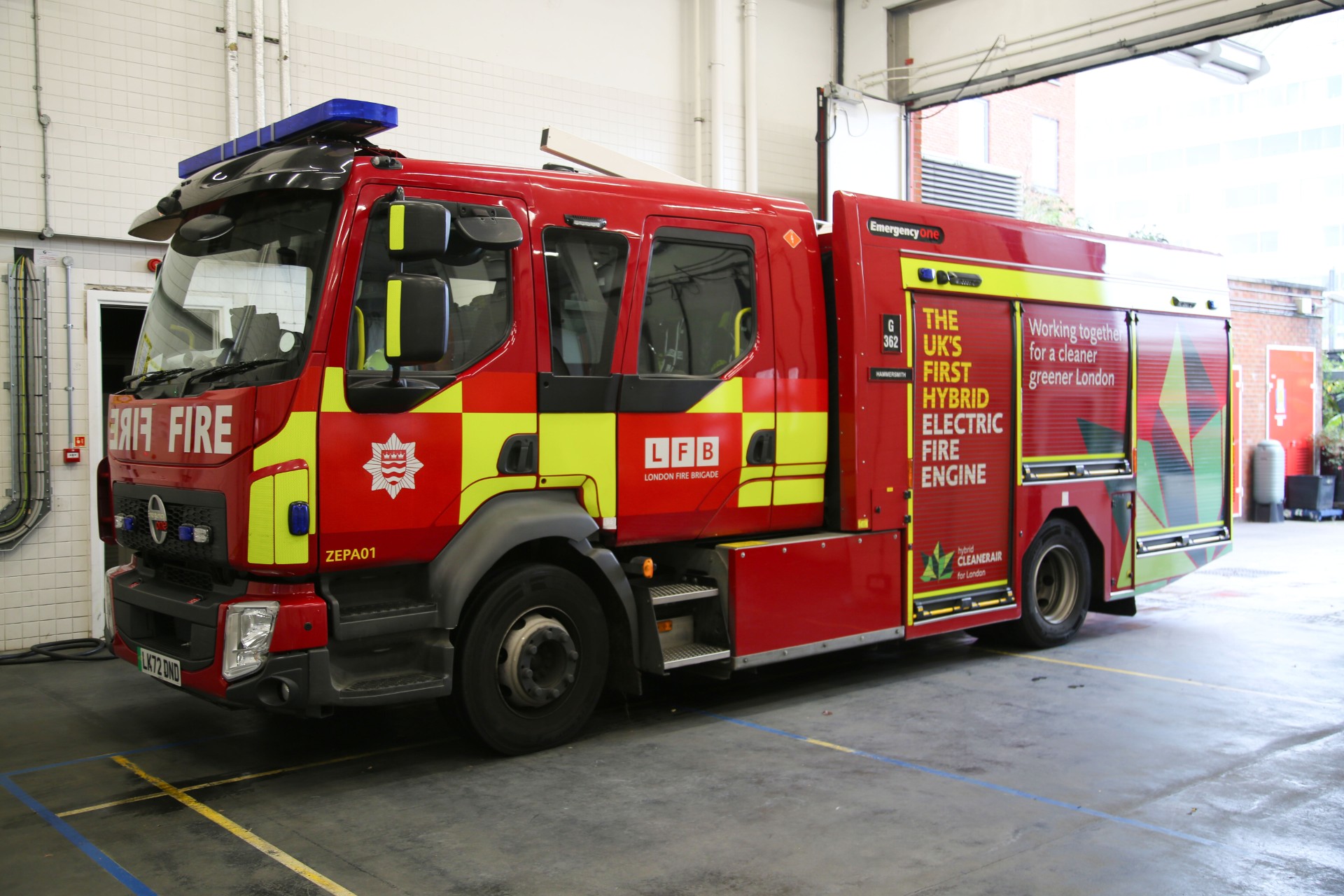
The Brigade became the first fire and rescue service in the UK to trial an electric-hybrid fire engine after partnering with Emergency One and Babcock Critical Services to develop the pioneering appliance. The appliance is estimated to have saved almost 17 tonnes of carbon dioxide emissions compared with a standard diesel fire engine over the course of the trial*. By producing no diesel exhaust emissions during operation, it has also contributed to improved local air quality.
While largely identical to a standard fire engine, ZEPA01 has a range of more than 200 miles and can pump water continuously for up to four hours. As a prototype vehicle, it has also undergone a series of upgrades and refinements throughout the trial period, helping engineers better understand how zero-emission technologies could operate in frontline emergency service environments.
Deputy Assistant Commissioner Frazer Ferguson said: "The successful completion of this trial is a significant milestone, both for London Fire Brigade and for the wider fire and rescue sector.
"ZEPA01 has been tested in real-world operational conditions, responding to emergencies across London and proving itself alongside our existing fleet. Attending more than 1,500 incidents, including major fires, it has given us invaluable insight into how this technology performs when it matters most.
"This project has been made possible through the dedication and expertise of colleagues across the Brigade and our industry partners. Their work has helped turn an ambitious concept into a functioning frontline fire engine, demonstrating what can be achieved through innovation and a commitment to reducing emissions while continuing to deliver the high standards of service Londoners expect."
The trial formed the first phase of the Brigade's Ultra-Low Emission Fleet programme, which is exploring ways to reduce emissions across its vehicle fleet while maintaining operational effectiveness.
Building on the lessons learned from ZEPA01, the programme is also exploring innovative solutions to some of the unique challenges faced by electric emergency response vehicles. One area of focus is vehicle-to-vehicle energy transfer technology, with a fully electric ZEPAV2V appliance being developed with engineering specialist Equipmake and Emergency One, which would allow electric fire engines to remain at incidents while receiving power from another vehicle. The technology seeks to address one of the key operational challenges for electric fire appliances during prolonged incidents.
The Brigade is also continuing to expand its charging infrastructure across London. The majority of fire stations are now equipped with electric vehicle charging facilities, including high-powered chargers at a number of locations. Alongside this, the Brigade has rolled out two fully electric large goods vehicles at its Operational Support Centre and a fleet of Volvo XC40 electric cars used for driver training.
Deputy Mayor for the Fire Service, Jules Pipe CBE, said: “Our emergency services play an important role in helping to make our capital zero carbon and London Fire Brigade’s successful trial of the UK’s first electric-hybrid fire engine is driving innovation across the country.
“This high-performance green fire engine has helped to ensure Londoners breathe cleaner air, whilst tackling emergencies across the city – proving once again that sustainability can and must be at the heart of the modernisation of our public services as we build a cleaner, greener, and safer London for all.”
Notes to editors
· * Based on ZEPA01 using 100kWh per day, 100kWh equalling 33 litres of diesel. 1 litre of diesel = 2.68kg of CO2. Electric CO2 = 0.13 per kWh, 22500 x 0.13 = 2,925kg of CO2. (Diesel CO2 – Electric CO2 = total CO2 saved)