For 130 years, Fulham Fire Station has served the local community from its prominent site in west London. From the days of horse-drawn fire engines and watch towers to the modern emergency services of today, the station has played an important role in protecting Fulham and its residents.
Early fire protection in Fulham
Fulham was originally part of the county of Middlesex. In 1855, responsibility for some local services transferred to the Metropolitan Board of Works. Ten years later, the organisation established the Metropolitan Fire Brigade (MFB), the forerunner of today's London Fire Brigade.
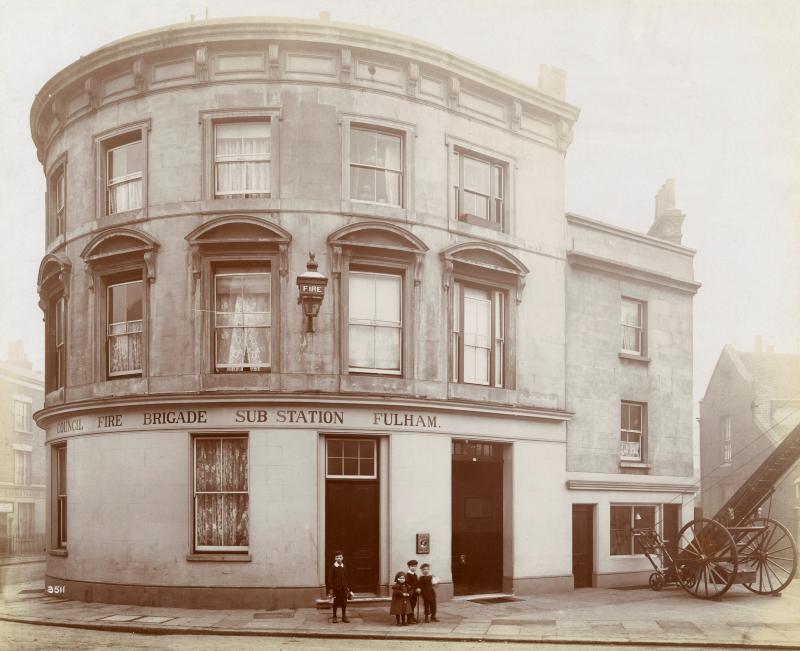
Fulham's fire sub-station, since demolished
To protect the growing area, the MFB built at least two fire stations in Fulham. One was located on Fulham Road, near an area known as Percy Cross. A second sub-station at 233 North End Road housed a wheeled escape ladder, an early firefighting appliance used for rescues and access to upper floors.
As Fulham continued to expand, a larger and more modern fire station was needed.
A new fire station
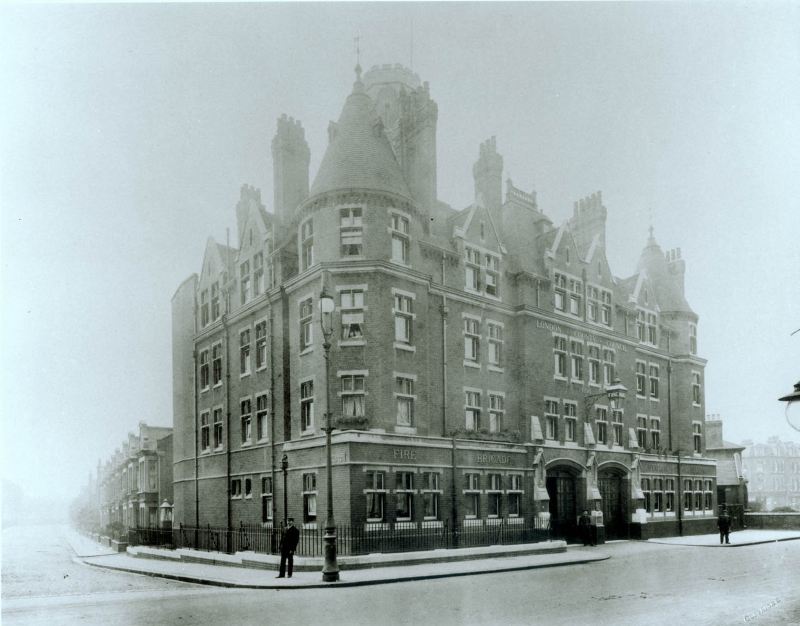
A new fire station for Fulham on the corner of Fulham Road and Shottendane Road, in around 1900
The new Metropolitan Fire Brigade fire station was officially opened on 5 November by Mr Urquhart, Chairman of the London County Council Fire Brigade Committee. Among those attending the opening ceremony were MFB Chief Officer Lionel de Latour Wells and several members of the council.
Designed by London County Council architect Thomas Blashill, the station was an impressive building featuring distinctive red brickwork with Portland stone detailing. The roof tiles were manufactured in Shropshire by the respected firm Broseley and Jackfield.
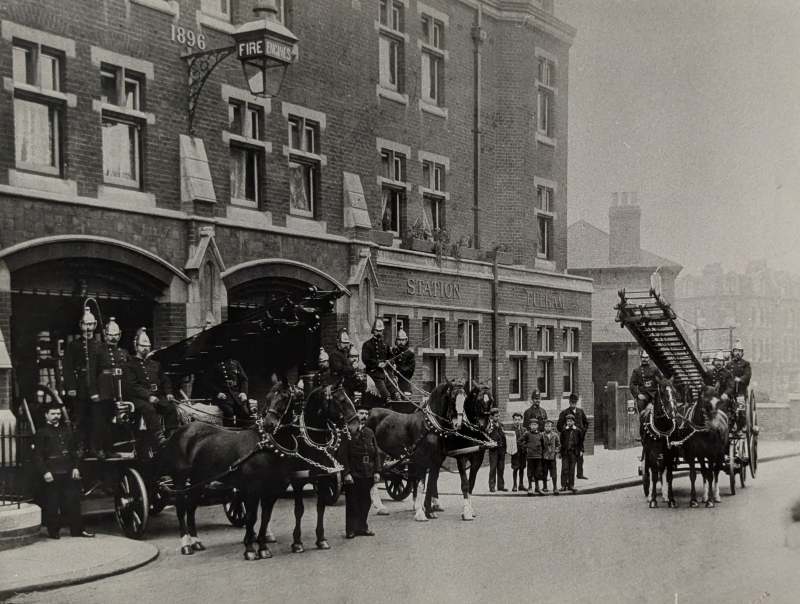
Firefighters posed ready with the horse-drawn fire engines outside of Fulham Fire Station in the early 1900s
The station provided significantly improved facilities for firefighters and their families. Living accommodation was available for a station officer, twelve married firefighters, six single firefighters and a coachman, whose responsibilities included caring for the four horses housed in the station stables.
One of the building's most notable features was its 80-foot watch tower. Before modern communications systems, firefighters maintained a constant watch from the tower, scanning the surrounding area for signs of smoke and fire.
Fulham during the Second World War
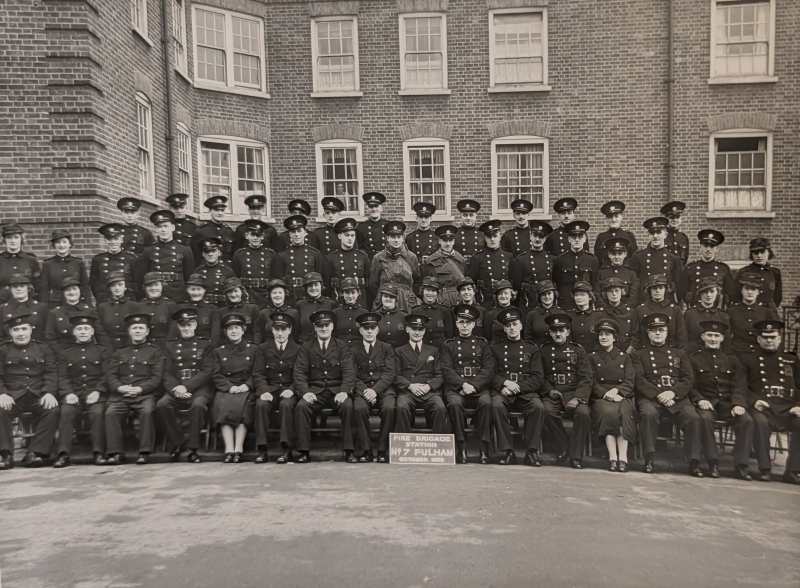
Auxiliary Fire Service personnel stationed at Fulham in 1939
As the threat of war increased, the Auxiliary Fire Service (AFS) was established in 1938 as part of Britain's Civil Defence Service. Its purpose was to provide additional firefighters and equipment to support existing fire brigades during wartime.
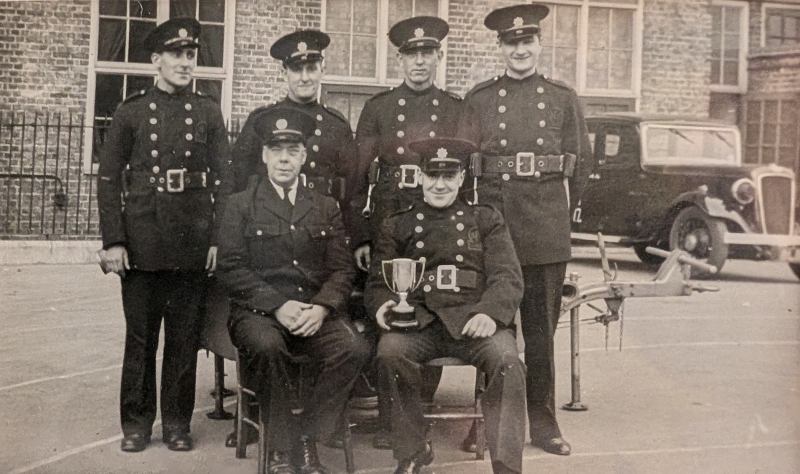
Auxiliary Fire Service members posed with their trophy in around 1940, likely at at one of the sub-stations
Fulham was supported by at least six AFS sub-stations, many of which were based in local schools, including Fulham Central Girls' School in Finlay Street.
During the early years of the war, these sub-stations often operated with little more than a trailer pump. These portable pumps were typically towed by taxis or vans, with firefighters travelling alongside their equipment.
In 1941, all fire brigades throughout the country were brought together under a single organisation: the National Fire Service (NFS).
After the war
The National Fire Service was disbanded in 1948 and Fulham Fire Station once again became part of the London Fire Brigade.
Rescuing Dennis
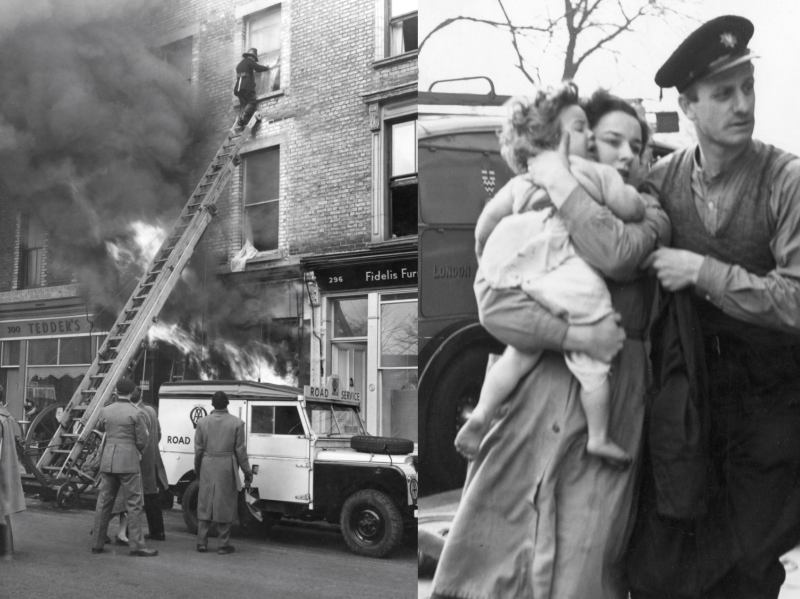
Left: Sub Officer Kirby at the top of the wheeled escape ladder ready to make the rescue. Right: Dennis reunited with his mother
On 25 February 1956, Brigade crews attended a fierce fire which had started at a shop that sold oil on Old Brompton Road, South Kensington. Firefighters had acted quickly to reports that a young boy called Dennis was trapped in his cot in the front room, on the second floor of the building.
A wheeled escape ladder allowed Sub Officer Temple to gain access to the building through a window, closely followed by Sub Officer Kirby from Fulham Fire Station.
Kirby rescued Dennis safely and made the climb down the escape ladder, followed by Temple and supported by jets of water, to keep the flames at bay. The heat and the smoke from the fire in the ground floor shop made the situation extremely dangerous.
The dramatic rescue and Dennis's reunion with his family captured the public's imagination. Newspapers across Britain and around the world published photographs of Sub Officers Kirby and Temple, praising their bravery and quick actions.
In recognition of their courage and devotion to duty, both firefighters were awarded the Queen's Fire Service Medal, one of the fire service's highest honours.
Historical significance
Over the decades, the station continued to serve a changing city while retaining its historic character. Today, it is recognised as a Grade II listed building, reflecting its architectural and historical significance. It is also one of the oldest operational London Fire Brigade stations still in use.
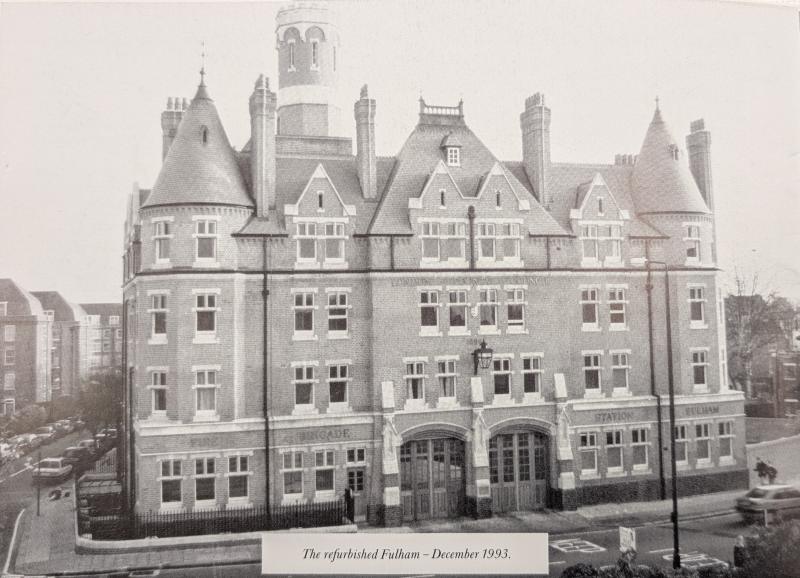
The building underwent a major refurbishment in 1993 ensuring it could continue serving the community while preserving its historic features.
Fulham Fire Station today
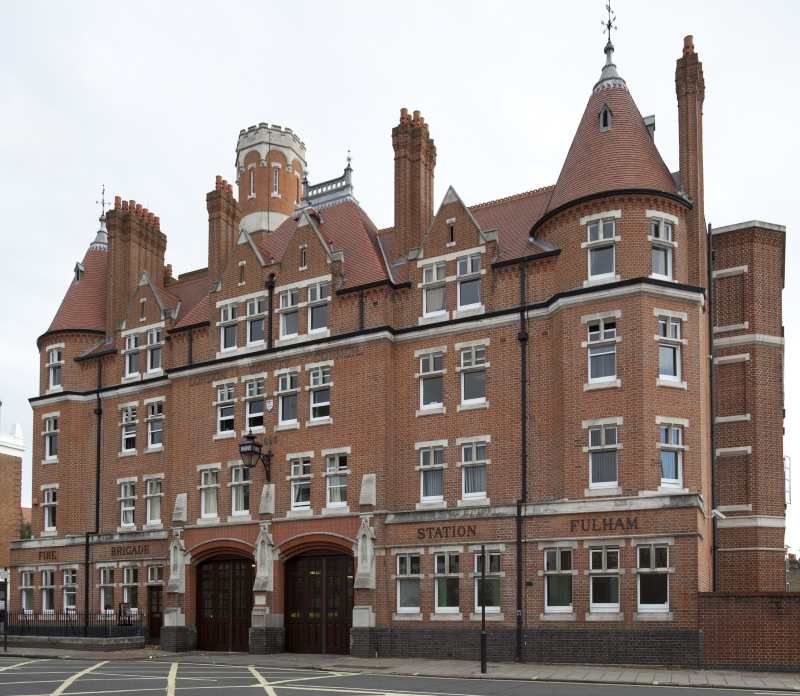
Today, Fulham Fire Station, known operationally as G35, responds to a wide range of emergencies, including fires, road traffic collisions, flooding and other incidents requiring specialist assistance.
Alongside its emergency response role, the station works closely with the local community, supporting prevention, protection and safety initiatives. Through education, engagement and operational preparedness, Fulham Fire Station continues a long tradition of public service that stretches back more than a century.