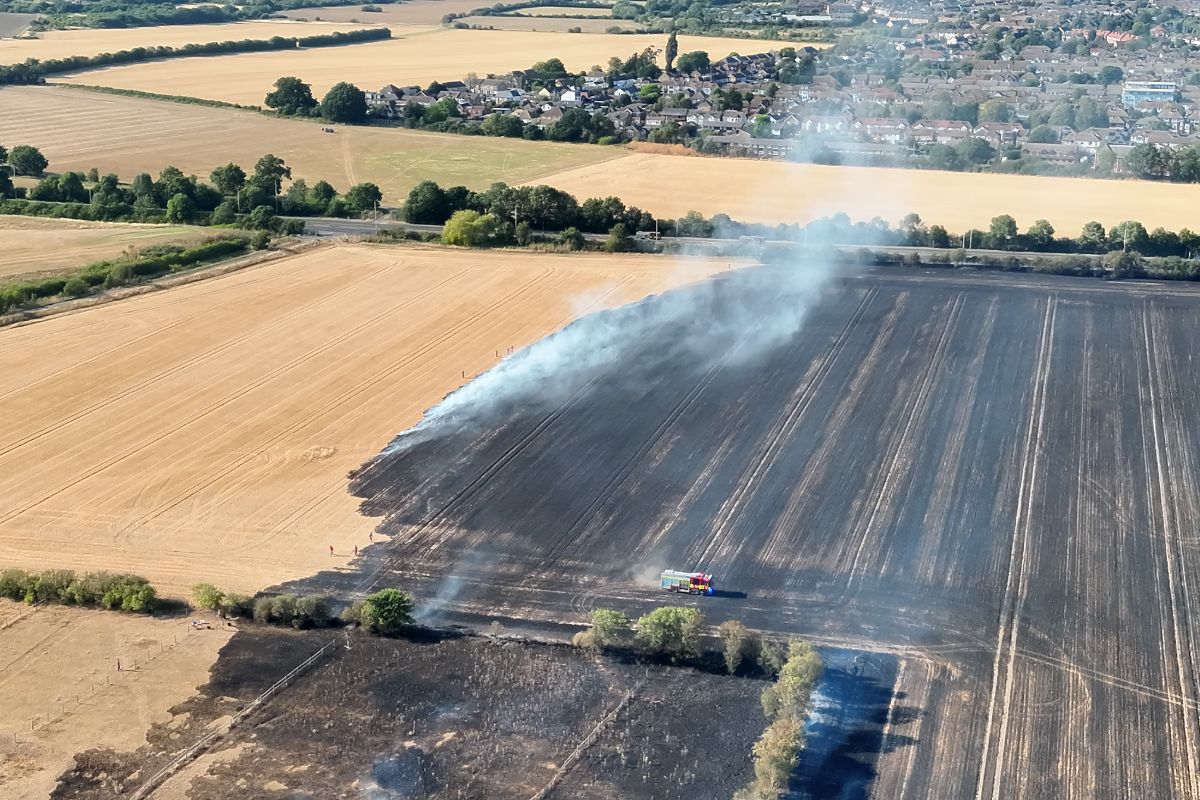
As temperatures topped 30 degrees in parts of the capital and prolonged dry conditions continued, London Fire Brigade experienced its busiest 24-hour period of 2026 on 29 July, responding to the highest number of grass fires recorded in a single day so far this year.
Control Officers answered more than 1,300* emergency calls, while firefighters attended more than 500 incidents*. Of these, 218 calls were to grass fires, with crews attending 63 separate grass fires across London in just 24 hours. Over the past week alone, Control Officers have taken almost 1,000 calls related to grass fires*.
Many of the incidents were significant, particularly in north-east London. Havering recorded the highest number of grass fires, with 47 incidents, followed by Barking and Dagenham, which saw 16. Other incidents included:
- Six fire engines and around 40 firefighters responded to an outbuilding fire in Romford.
- Fifteen fire engines and around 100 firefighters tackled a grass fire in Rainham, where around four hectares of grassland was alight.
- Around three hectares of grassland were damaged by fire on Western Avenue in Dagenham.
- Firefighters responded to a grass fire in Hornchurch Country Park.
- Six fire engines and around 40 firefighters tackled a fire involving rear gardens in Hornchurch.
- Firefighters attended two separate grass fires on Ingrebourne Hill in Rainham, which damaged nearly five hectares of grassland.
- Around two acres of grassland were damaged by fire on Field Way in Croydon.
- Eight fire engines and around 60 firefighters tackled a grass fire on Eastern Avenue in Romford.
- Around two hectares of grassland were damaged by fire in Hornchurch.
- Around two hectares of grassland were alight in Hayes.
- Around four hectares of grassland were damaged by fire on London Road in Romford.
- Eight fire engines and around 60 firefighters responded to a grass fire on Southern Way in Romford, where around four acres of grassland were damaged.
- Around two hectares of grassland were damaged by fire in Croydon.
- Four fire engines and around 25 firefighters responded to a fire involving rear gardens in Enfield.
Despite the increased demand, the Brigade maintained emergency cover across the capital by continually monitoring incidents and moving resources to where they were needed most. Specialist Terrain Support Vehicles remained available to respond to grass and wildfire incidents, while water rescue teams continued to provide cover across London's 370 miles of waterways.
Assistant Commissioner Andy Pennick said: "The last 24 hours have been incredibly challenging for our firefighters, Control Officers and support staff, who have worked tirelessly in demanding conditions to keep Londoners safe. Control Officers answered more than 1,300 emergency calls, while firefighters have been operating in arduous, hot conditions to tackle fires and protect homes and communities.
"While we've been fully prepared to respond, the public has an important role to play in preventing fires from starting in the first place. In these hot, dry conditions, grass fires can spread incredibly quickly, threatening homes, wildlife and the environment, while tying up vital emergency resources.
"With so many of London's parks and open spaces close to homes and communities, we're asking everyone to take extra care. Please don't use disposable barbecues in parks or open spaces, always dispose of cigarettes responsibly and take your litter home if bins are full.
"If you're having a barbecue at home, keep it well away from fences, sheds, trees and anything else that could catch fire. You can also help protect your home by clearing away dry vegetation and garden waste and keeping combustible materials away from buildings. Small actions like these can make a big difference in reducing the risk of fire and keeping your community safe."
What to do if you discover a wildfire
- Make sure you're in a safe place (away from vegetation and smoke). Stay calm and call 999 immediately.
- If you're in your car, close all windows and vents.
- When you call 999 be as precise as you can about the location, the size and any other information. The free what3words app can help you pinpoint your location, so download it now.
- Don't try to tackle the fire yourself.
- Stay well away from wildfires as fire can smoulder or spread underground.
How to prevent grass fires
- Don't have barbecues (including disposable ones) in parks, public spaces or on balconies. Take a picnic instead.
- Never leave barbecues unattended and put them out properly after you’ve finished using them.
- Take extra care to ensure cigarettes are put right out and disposed of safely.
- Glass bottles and other clear materials can start fires if left in direct sunlight. Make sure you don’t leave any glass bottles lying around in parks and open spaces. Take your litter home with you if nearby bins are full.
Notes to editors
· *Between 00:00 and 23:59 on Wednesday 29 July Control Officers took 1,303 emergency calls and firefighters attended 526 incidents
· *Between 23 July 2026 and 29 July 2026 Control Officers took 975 calls to grass fires across London