- London Fire Brigade calls on Londoners to spring clean their gardens ahead of summer to cut the risk of grass fires
- Removing dry vegetation and creating fire breaks before hotter weather arrives, can a make a significant difference in limiting the damage caused by wildfires
- Last summer, 122 wildfires were recorded by the end of August 2025, the highest since the 2022 heatwaves and double the number seen in 2023
- Outer London areas face higher risks, with boroughs on the urban–rural interface seeing more than three times the number of grass fires than inner London.
As the brighter weather arrives and Londoners begin their spring clean, London Fire Brigade is urging residents, community groups, councils and landowners to take action to reduce the risk of grass fires by clearing dry vegetation in gardens, parks and open spaces.
With warmer, drier weather on the way, grass, shrubs and garden waste can quickly become fuel for fires. One way to reduce the risk is by creating fire breaks, which are clear strips of land where long grass, dry leaves and other flammable plants have been removed. These gaps help slow or stop a fire from spreading by reducing how much it has to burn.
London presents one of the most challenging urban environments in the world for a fire and rescue service. Just under half of the capital is considered green space, but the risk is heightened because many of these areas sit close to homes and businesses. Fires in dry grass can spread rapidly, particularly in windy conditions, and can quickly threaten nearby properties.
Those responsible for managing these green spaces are being asked to take preventative steps ahead of the summer. This includes creating fire breaks by cutting and removing grass or, in some cases, ploughing earth to remove flammable vegetation.
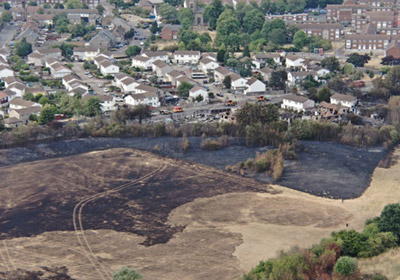
Protecting your home from wildfires and grass fires
Do you know how to protect your home and garden from wildfires? There are a few steps you can take.
In June, during a grass fire on Wigley Road in Feltham, firefighters successfully prevented flames from spreading to nearby properties by creating fire breaks, which acted as barriers and reduced the fuel available for the fire to consume. The Brigade is once again asking local authorities to help by proactively creating fire breaks ahead of summer.
London Fire Brigade’s Deputy Commissioner Spencer Sutcliff said: “As we approach the warmer months, we’re looking at how we can help prevent grass fires this summer and how the public can support that effort. Periods of hot, dry weather significantly increase the risk of grass fires, particularly when grass becomes tinder-dry, as flames can spread rapidly. This becomes especially concerning when fires threaten homes and livelihoods, which is why taking proactive steps to reduce the risk is so important.
“This week, I wrote to the chief executives of every London local authority outlining key measures they can take, including creating fire breaks, clearing rubbish, and working closely with local landowners.
“We have strengthened how we plan, train, and respond to grass fires, but the steps we are asking councils and landowners to take now will be critical in minimising risk as we head into summer.”
In 2025, London experienced its highest number of wildfires since the extreme heat of 2022. Firefighters attended around 88 wildfires across the capital during June, July and August, with 122 wildfire incidents recorded by the end of August. This is double the number seen in 2023 and a 42 per cent increase on 2024. This trend highlights the growing risk from hot and dry conditions.
With forecasts this year indicating warmer than average temperatures [1], there is a clear need for early, preventative action to reduce risk to communities, infrastructure and the natural environment.
Between 2022 and 2025, outer London boroughs recorded over 6,000 grass fires, which is more than three times the number seen in inner London, which recorded fewer than 1,800. The highest totals were concentrated in outer areas such as Havering (536 grass fires), Bexley (494), Bromley (462), Hillingdon (419) and Enfield (404).
These outer-London boroughs sit on the urban–rural interface, where the risk of fires spreading to homes is higher. While the Brigade is encouraging all Londoners to spring clean their gardens to reduce the fire risk, residents in these areas of suburban London are being urged to take extra care in clearing gardens and outdoor spaces.
Deputy Commissioner Sutcliff added: “Spring cleaning offers a dual benefit: it keeps gardens and public spaces tidy and welcoming, while also helping to make communities safer.
“Grass fires can spread fast across parks and open spaces towards nearby homes. By creating fire breaks, removing dry debris, and storing waste safely, you can help protect your home, your neighbourhood, and local wildlife.
“Remember to keep garden waste in secure piles and dispose of it responsibly and regularly. Don’t leave it to dry out near homes, fences, or pathways. Small steps like these make a big difference in keeping your community safe.”
The Brigade is also reminding Londoners that barbecues, bonfires and outdoor heating equipment can pose additional risks when used near dry grass or brush. Keeping these well away from flammable materials, supervising them at all times and having a water source nearby can help prevent accidents.
Notes to editors
- [1] 2026 outlook: likely another year above 1.4°C - Met Office
- London Fire Brigade wrote to local authorities last summer to ask them to create firebreaks in their outdoor spaces to help reduce the risk of grass fires spreading
| Borough | Number of grass fires between 2022-2025 |
|
Havering |
536 |
|
Bexley |
494 |
|
Bromley |
462 |
|
Hillingdon |
419 |
|
Enfield |
404 |
|
Croydon |
397 |
|
Greenwich |
393 |
|
Hounslow |
364 |
|
Barnet |
338 |
|
Redbridge |
311 |
|
Barking and Dagenham |
307 |
|
Brent |
297 |
|
Ealing |
270 |
|
Haringey |
254 |
|
Newham |
254 |
|
Waltham Forest |
230 |
|
Lewisham |
227 |
|
Merton |
195 |
|
Lambeth |
166 |
|
Tower Hamlets |
166 |
|
Richmond upon Thames |
162 |
|
Sutton |
157 |
|
Harrow |
147 |
|
Southwark |
147 |
|
Wandsworth |
141 |
|
Hackney |
139 |
|
Islington |
104 |
|
Kingston upon Thames |
89 |
|
Camden |
87 |
|
Westminster |
85 |
|
Hammersmith and Fulham |
70 |
|
Kensington and Chelsea |
36 |
|
City of London |
3 |
|
Grand Total |
7851 |