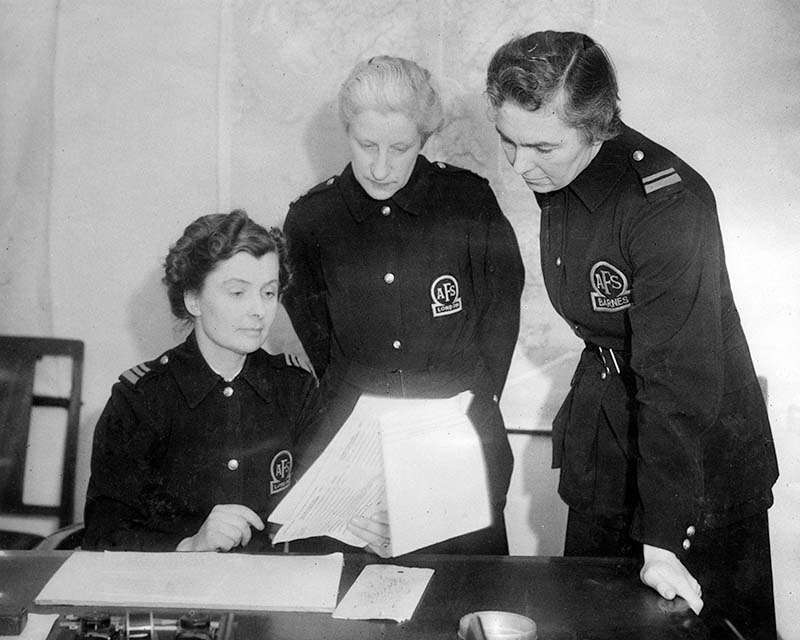
Lady Betty Cuthbert (left), Mary Oddy (centre) and Joyce Hicks (right)
During the Second World War, the dedicated work of Lady Betty Cuthbert, Joyce Hicks and Mary Oddy helped them rise to the highest ranks in the Auxiliary Fire Service (AFS) and later the National Fire Service (NFS)
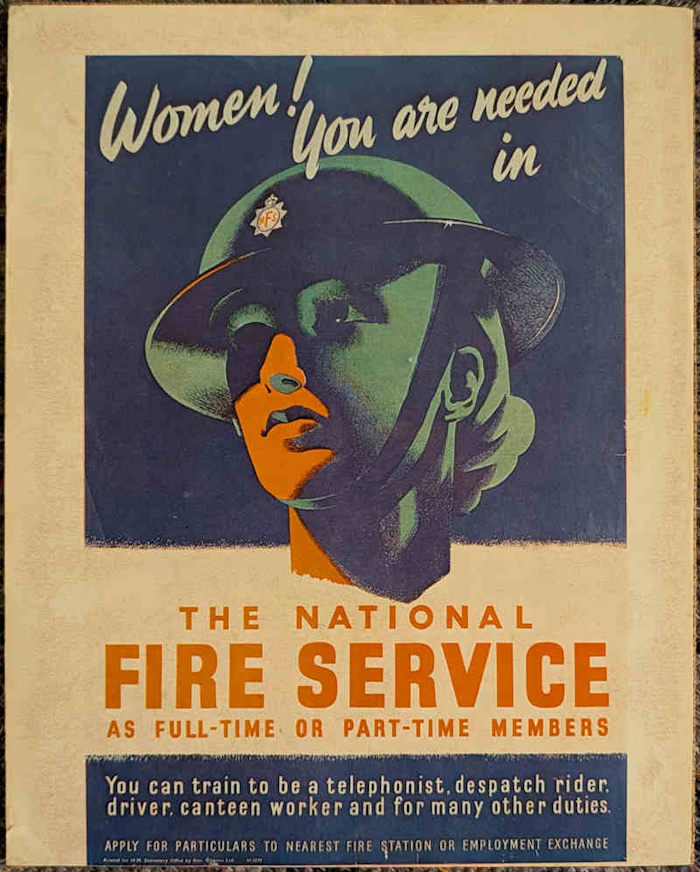
National Fire Service poster focused on attracting women recruits
With the threat of war looming over London and the UK, this became a unique moment in which women were actively recruited to support the fire service. They were integrated into almost every level of its operations, helping to protect the country during one of its most challenging periods.
Lady Betty Cuthbert
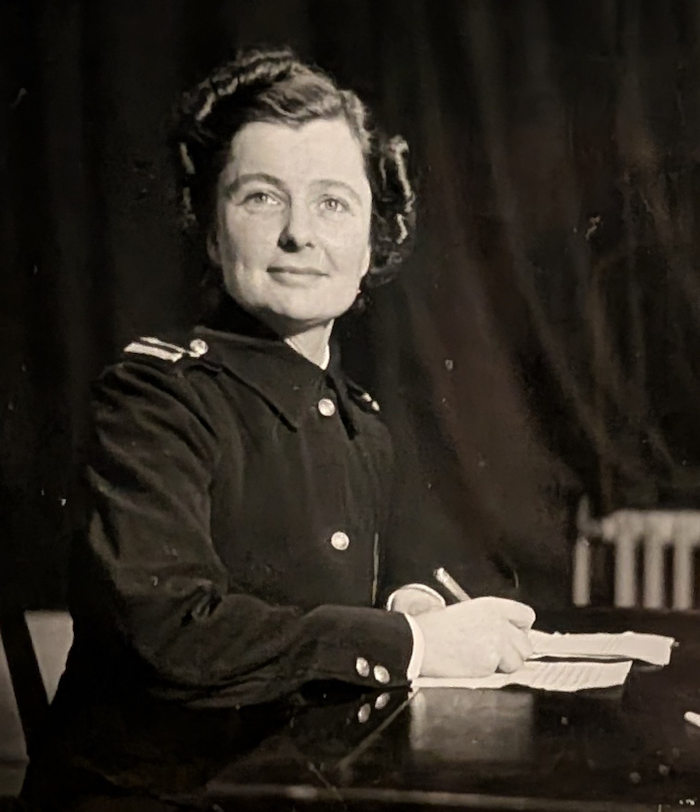
Official portrait of Lady Cuthbert
Lady Betty Cuthbert was born in Calcutta (now Kolkata) in 1904, and first volunteered to join the AFS in 1938, one of the first to do so. When the NFS was created in 1941, she was appointed Senior Woman Staff Officer and became a member of the newly established national leadership team. In 1943 she was promoted to the top women’s rank of Chief Woman Fire Officer for England and Wales, based at London Fire Brigade headquarters, Albert Embankment.
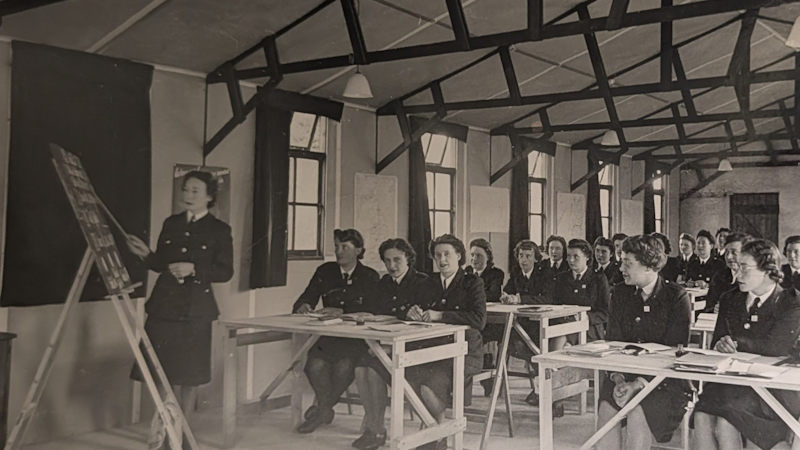
NFS firewomen undertaking training
Cuthbert was a well‑known and popular figure. As well as coordinating over 90,000 full and part-time firewomen across England and Wales, she also oversaw recruitment and organised training, fitness programmes and the duty structures. She was awarded an OBE in 1943, a CBE in 1946, and received a commendation for her wartime service. She retired in 1946.
Joyce Hicks
Joyce Hicks, born in 1900, had gone on to teach science after completing her university degree. Living in Wandsworth, she joined the London AFS in 1939 as a trailer pump driver, just three months before war broke out. She was promoted to Junior Officer before becoming Assistant Section Officer at Barnes Brigade headquarters.
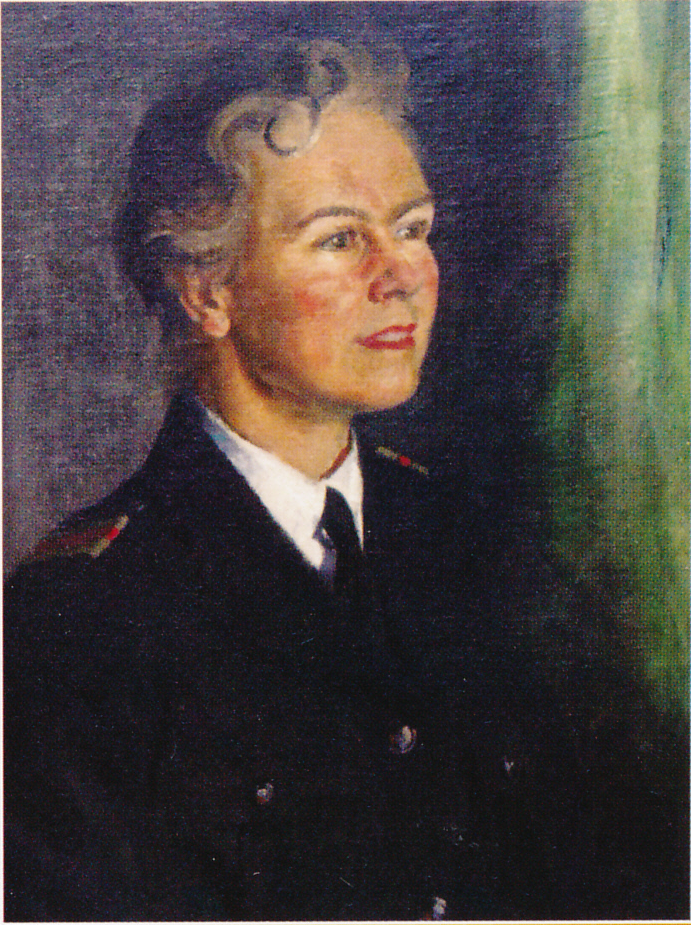
Mrs J Hicks OBE, Deputy Chief Fire Officer by Norman Hepple. Oil, 1942
She went on to be promoted again to NFS Staff Officer in 1942, based at the London Fire Brigade headquarters. Soon after in January 1943 she was appointed Deputy Chief Woman Fire Office. In this role she went onto manage no. 4 region and liaising directly with the Home Office Fire Staff. To celebrate a portrait by ‘Fireman Artist’ Norman Hepple was commissioned.
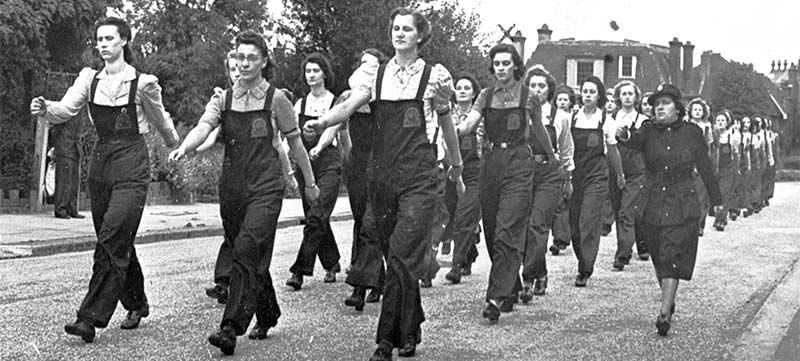
Firewomen going through squad drill as part of their basic training in around 1941
Hicks was responsible for the fitness of women recruits. She oversaw the introduction of a compulsory medical and fitness test that all new recruits had to pass before joining. Prior to this it had not been compulsory for joining the AFS.
In recognition of her wartime work Hicks was awarded an OBE and she continued to work in the fire service until her retirement in March 1954.
Mary Oddy
Mary Oddy was born in Yorkshire in 1901. Before the war she worked as a secretary at a London school, liaising closely with parents. She joined the AFS in 1938, and by May 1939 she had been appointed AFS Company Officer.
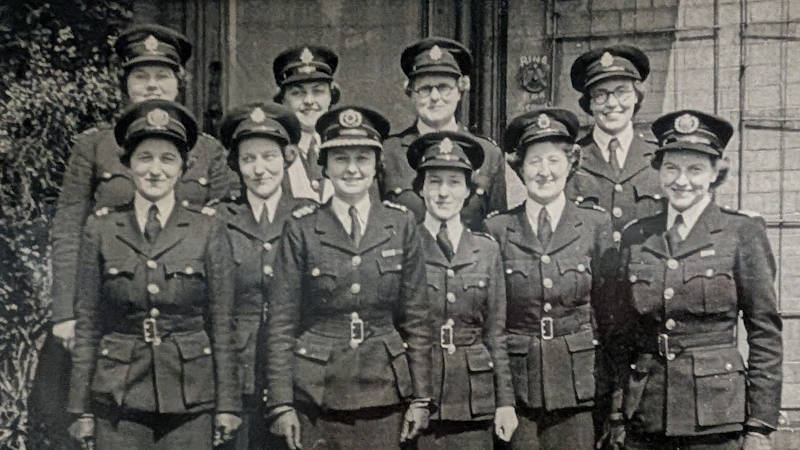
A group of NFS firewomen in 1945
Her leadership was quickly acknowledged. In 1941 she became a Woman Staff Officer, followed later that year by promotion to Senior Area Officer for Area No. 35. She was later given responsibility for Senior Area Officer for No. 5 Region, covering the entire London area. This role would have brought her into close working contact with Lady Betty Cuthbert and Joyce Hicks at Brigade headquarters.
Oddy received her OBE in the King’s New Year Honours List in 1944. Contemporary press reports described her as:
“One of London’s pioneering firewomen.”
Reflecting on Their Impact
Cuthbert, Hicks and Oddy served alongside 94 other women officers who held senior ranks in the National Fire Service. Together, these women were also awarded:
- 11 MBEs
- 4 OBEs
- 3 BEMs
- 1 CBE
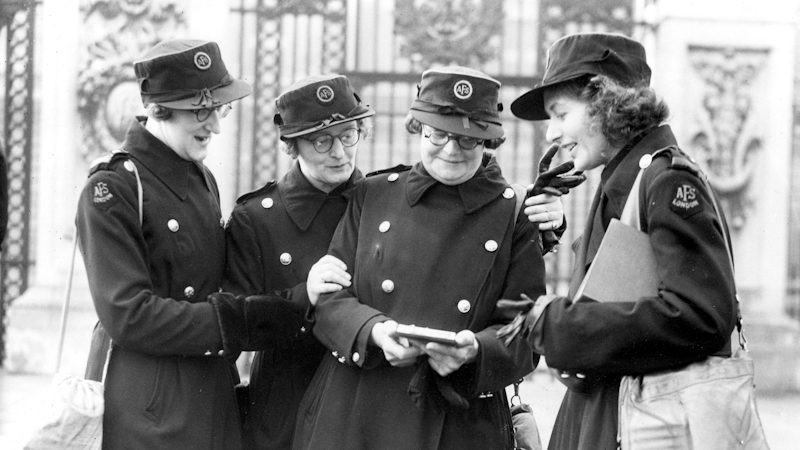
AFS Section Officer Millicent Pennington showing others her British Empire Medal awarded in 1940
In January 1947, Cuthbert authored a detailed report for the Home Office titled The History of the Women’s Branch of the Fire Service 1938–1946. It documented the creation, structure and management of the AFS and the later NFS. She highlighted the significant impact made by the women’s branch in London, noting that the London County Council and London Fire Brigade were early adopters of integrating women into fire service roles. She wrote:
“Certainly, the London County Council... can claim the distinction of being the first Brigade to form a uniformed women's branch complete with its own officers, training instructors, and training schools — an organisation which proved so successful that it became the framework on which was built the women's branch of the Service as it is known today.”
Cuthbert also hoped the report would serve as a guide if a similar service ever needed to be established again.
These women were true trailblazers, laying the foundations for future generations of women in the fire and emergency services.